
Career Counseling in Nagpur: How Professional Career Guidance Helps Students Choose the Right Career Path
Choosing a career is an important decision that can influence a person’s education, professional development and future opportunities. Students in India often face this decision at different stages, particularly after Class 10, Class 12 and graduation. With a wide range of academic streams, professional courses, vocational programmes and emerging career fields, selecting a suitable direction can sometimes feel confusing.
Career counseling is a structured process that helps students understand their interests, abilities, personality characteristics, learning preferences and educational goals. It provides information about different career options and helps individuals evaluate how these options relate to their strengths, circumstances and long-term plans. Rather than choosing a career on behalf of a student, professional career guidance supports informed and independent decision-making.
Students may experience uncertainty because of parental expectations, peer influence, examination pressure, limited awareness of career opportunities or concerns about future employment. Some may be unsure whether to select Science, Commerce, Humanities, vocational education or a specialised professional course. Others may have several interests but find it difficult to identify which direction to explore first.
Career counseling can help students and families understand these decisions through individual discussions, educational planning and, when appropriate, psychometric or personality assessments. A structured process may be useful for school students, college students, graduates and working professionals considering a career change.
What Is Career Counseling?
Career counseling is a professional guidance process that helps individuals explore educational and occupational choices. It considers personal interests, abilities, values, personality characteristics, academic performance, learning preferences and practical circumstances.
The purpose is not simply to recommend a popular profession or identify a single occupation through a test. Instead, career counseling helps an individual understand different possibilities, compare relevant requirements and develop a realistic plan.
Career counseling may help with:
- Identifying personal interests and areas of aptitude.
- Understanding academic strengths and areas that may need improvement.
- Exploring suitable educational streams after Class 10.
- Comparing undergraduate courses and professional qualifications after Class 12.
- Understanding vocational, technical and skill-based career options.
- Exploring personality characteristics and learning preferences.
- Evaluating career options based on individual goals and practical circumstances.
- Managing confusion, uncertainty and pressure related to career decisions.
- Planning further education, skill development and professional growth.
- Reviewing career choices during major educational or professional transitions.
A career counselor provides information and a structured decision-making process. The final choice remains with the student, taking into account personal preferences, family circumstances, educational eligibility and available opportunities.
Why Is Career Guidance Important for Students?
Students often make educational decisions at an age when they are still discovering their interests and abilities. Without sufficient information, they may select a stream or course mainly because friends have chosen it, family members recommend it or a particular profession is considered socially desirable.
Professional career guidance can help students examine these influences and understand their own preferences.
Important benefits of a structured career guidance process include:
- Better self-understanding: Students can explore their interests, strengths, values and learning preferences.
- Awareness of career options: Guidance introduces students to academic, professional, vocational and emerging career fields.
- Informed stream selection: Students can compare Science, Commerce, Humanities and other educational pathways based on their interests and eligibility.
- Realistic educational planning: They can understand course requirements, entrance examinations, qualifications and possible career routes.
- Reduced decision-making confusion: A structured discussion can help organise information and identify practical next steps.
- Independent thinking: Students learn to evaluate choices instead of relying entirely on peer pressure or external expectations.
- Recognition of individual strengths: Career guidance considers abilities beyond examination marks, including creativity, communication and practical skills.
- Long-term planning: Students can identify skills and educational milestones relevant to their chosen direction.
Career guidance does not guarantee admission, employment or professional success. Its value lies in helping individuals make decisions based on better information and a clearer understanding of their circumstances.
Common Signs That a Student May Need Career Counseling
Career uncertainty is a normal part of educational development. However, when confusion continues or begins affecting academic decisions, motivation or emotional well-being, structured guidance may be helpful.
Some common signs include:
- Difficulty deciding which stream to select after Class 10.
- Confusion about undergraduate courses after Class 12.
- Repeatedly changing career preferences without a clear reason.
- Uncertainty about personal interests and strengths.
- Choosing subjects mainly because friends or relatives recommend them.
- Feeling pressured to pursue a particular profession.
- Difficulty understanding entrance examinations and course eligibility.
- Having several interests but not knowing how to compare them.
- Low confidence when discussing future educational plans.
- Worrying about employment opportunities and future financial independence.
- Feeling dissatisfied with a selected course or educational direction.
- Difficulty identifying practical steps towards a professional goal.
Signs that career-related stress may be affecting emotional well-being include:
- Persistent worry about examinations or future decisions.
- Difficulty concentrating because of career-related uncertainty.
- Repeated fear of making the wrong educational choice.
- Sleep difficulties during periods of academic pressure.
- Loss of motivation or avoidance of career-related discussions.
- Frequent comparison with classmates or siblings.
- Negative thoughts about personal abilities or future prospects.
These experiences do not automatically indicate a psychological disorder. If anxiety, low mood or stress becomes persistent and affects daily functioning, an appropriate mental health evaluation may be considered alongside career guidance.
Causes of Career Confusion Among Students
Career confusion can arise from several personal, educational, social and practical factors. Understanding these influences can help students and parents approach career decisions more constructively.
1. Limited Awareness of Career Opportunities
Many students are familiar with commonly discussed professions such as engineering, medicine, teaching, law and government services. However, they may have limited information about design, research, data analysis, finance, environmental studies, digital media, skilled trades, logistics, sports-related professions and other fields.
A lack of awareness can make students believe that only a small number of career paths are suitable or respectable.
2. Parental and Family Expectations
Parents naturally want their children to have educational and professional opportunities. However, difficulties may arise when family expectations do not match the student’s interests, academic strengths or preferences.
Open discussion can help families understand the student’s goals while considering financial circumstances, course requirements and future responsibilities.
3. Peer Pressure and Social Comparison
Students may select a stream or course because their friends are choosing it. Others may compare their marks, achievements or career plans with classmates. Such comparisons can create uncertainty and distract students from their individual abilities and interests.
4. Examination and Academic Pressure
Board examinations, entrance tests and competitive examinations can create pressure, especially when students believe that one result will determine their entire future. Career planning should consider academic performance without treating marks as the only measure of ability.
5. Unclear Understanding of Personal Strengths
Some students know which subjects they enjoy but are unsure how those interests relate to future occupations. Others may have abilities in communication, creativity, leadership, practical work or problem-solving that are not fully reflected in academic scores.
6. Fear of Making the Wrong Decision
Students may worry that selecting one stream or course will permanently close other opportunities. In reality, educational pathways can sometimes be flexible, although certain courses have specific subject and eligibility requirements.
7. Financial and Practical Considerations
Course fees, location, family responsibilities, access to institutions, scholarship opportunities and duration of study can influence educational decisions. These factors should be discussed realistically during career planning.
8. Influence of Social Media and Career Trends
Online content may create unrealistic expectations about income, professional success or the ease of entering a particular field. Students should verify career information through recognised institutions, official course requirements and reliable occupational sources.
Career Counseling After Class 10: Choosing the Right Stream
Class 10 is an important stage because students generally begin selecting subjects that influence their higher-secondary education. The choice should reflect the student’s interests, academic preparation, eligibility and future educational plans.
1. Science Stream
The Science stream may be suitable for students interested in scientific concepts, technology, healthcare, mathematics, experimentation or research. Subject combinations and eligibility requirements vary by educational board and institution.
Possible areas of further study include:
- Engineering and technology.
- Medicine and allied healthcare fields.
- Pharmacy and life sciences.
- Biotechnology and microbiology.
- Computer science and information technology.
- Pure sciences and scientific research.
- Environmental science and related disciplines.
- Architecture and other technical fields, subject to eligibility.
Students should understand the subject requirements and entrance examination processes associated with their intended courses before selecting combinations.
2. Commerce Stream
Commerce may interest students who want to understand business, finance, accounting, economics and organisational activities.
Possible educational and professional directions include:
- Accounting and finance.
- Business administration and management.
- Economics and financial analysis.
- Banking and financial services.
- Company administration and compliance-related fields.
- Entrepreneurship and business development.
- Marketing and business communication.
- Professional qualifications in commerce and finance, subject to eligibility.
Students should review the subjects offered by their school and the admission requirements of future courses.
3. Humanities or Arts Stream
Humanities offers opportunities to study people, society, communication, culture, history and public institutions. It may suit students interested in social sciences, language, creative work and human behaviour.
Possible fields include:
- Psychology and social sciences.
- Law and legal studies.
- Journalism and mass communication.
- Political science and public administration.
- History, geography and sociology.
- Languages, literature and writing.
- Education and teaching-related pathways.
- Design, media and creative disciplines.
The subjects available and the eligibility for specific professional courses should be checked before making a decision.
4. Vocational and Skill-Based Education
Vocational education can provide practical learning and occupational skills. It may be appropriate for students who prefer hands-on activities or wish to explore technical and industry-oriented training.
Possible areas include:
- Information technology and computer applications.
- Electrical and electronics-related skills.
- Automotive and mechanical trades.
- Hospitality and tourism.
- Retail and business operations.
- Healthcare support and allied vocational areas.
- Media, design and practical creative skills.
Students should verify the recognition, curriculum, practical training and progression opportunities of any vocational programme.
5. Diploma and Polytechnic Pathways
Depending on eligibility and admission rules, students may explore diploma or polytechnic programmes after Class 10. These programmes generally focus on practical and technical education in selected fields.
Before selecting a programme, students should review the institution’s recognition, course duration, admission process, practical facilities and options for further study.
Career Counseling After Class 12: Planning Higher Education
After Class 12, students may need to choose an undergraduate degree, professional course, vocational qualification or entrance examination pathway. The decision should consider subjects studied in higher secondary education, academic performance, personal interests and eligibility requirements.
Common higher-education directions include:
- Engineering and technology: Undergraduate programmes in engineering, computer science and related technical fields.
- Medical and healthcare education: Medicine, dentistry, nursing, physiotherapy and other allied health disciplines, subject to specific eligibility and admission requirements.
- Commerce and finance: Degrees in commerce, accounting, economics, finance and professional qualifications.
- Management: Business administration, management studies and related programmes.
- Law: Undergraduate legal education through eligible admission pathways.
- Psychology and social sciences: Courses in psychology, sociology, political science and related subjects.
- Design and creative fields: Programmes in fashion, communication, product design, animation and other creative disciplines.
- Media and communication: Journalism, advertising, public relations and digital communication.
- Hospitality and tourism: Courses related to hotel management, tourism and service operations.
- Research and pure sciences: Degree programmes that may lead to further study, research or specialised occupations.
Students should check official admission notifications, entrance examination requirements, recognised qualifications, course costs and institutional details before applying. A career counselor can help organise this information, but admission decisions remain subject to the relevant institution and authority.
Career Options Beyond Traditional Professional Courses
Career opportunities continue to develop as technology, business practices, public services and social needs change. Students may benefit from exploring a broader range of occupations instead of limiting their decisions to a few familiar professions.
Some fields worth exploring include:
- Data and analytics: Data analysis, business intelligence and statistical applications.
- Digital technology: Software development, cybersecurity, cloud computing and information systems.
- Creative industries: Graphic design, animation, video production, content development and user experience design.
- Environmental fields: Environmental studies, sustainability, conservation and related research.
- Business and entrepreneurship: Marketing, operations, human resources, business development and independent ventures.
- Education: Teaching, educational technology, academic support and training.
- Sports and fitness: Sports management, coaching, physical education and related areas, subject to relevant qualifications.
- Public and social services: Social work, community development, public administration and development-related roles.
- Skilled technical occupations: Technical maintenance, manufacturing, electrical work and specialised trades.
- Research and innovation: Scientific, social and applied research in suitable disciplines.
The availability and future prospects of a particular occupation can change. Students should examine current qualification requirements, employment information and opportunities for skill development rather than relying on popularity alone.
Role of Psychometric Assessment in Career Counseling
Psychometric assessment may be used as one part of a career guidance process. It involves structured tools designed to explore selected characteristics such as interests, aptitudes, personality preferences, reasoning abilities or learning styles.
These assessments can help students organise their thoughts and identify areas that may be worth exploring. However, they should not be treated as final decisions about a person’s career or as predictions of future success.
Common assessment areas include:
1. Interest Assessment
Interest assessment explores the activities, subjects and professional areas that a student finds engaging. It may help identify whether the student is drawn towards scientific, social, creative, practical, administrative or other types of work.
2. Aptitude Assessment
Aptitude assessment examines selected abilities relevant to learning or problem-solving. Depending on the tool, it may include verbal reasoning, numerical reasoning, abstract reasoning, spatial understanding or other skills.
3. Personality Assessment
Personality assessment explores selected behavioural preferences and personal characteristics. It may help students reflect on communication preferences, working styles, decision-making patterns and preferred environments.
Personality results should not be used to place a student permanently into a particular occupation. Individuals can adapt, develop skills and work successfully in different environments.
4. Cognitive and Intellectual Assessment
Cognitive or intellectual assessment may examine selected abilities such as reasoning, memory, processing speed and verbal or non-verbal problem-solving. IQ testing may be considered when there is an appropriate assessment purpose, but an IQ score alone cannot determine career suitability.
5. Learning Style and Study Preference Assessment
Some assessments explore how students prefer to approach learning activities. These findings may help initiate discussions about study habits and educational preferences. However, learning-style categories should not be treated as fixed scientific labels or used to restrict teaching methods.
Important limitations of psychometric testing include:
- Assessment results represent selected characteristics, not the whole person.
- Scores may be influenced by language, educational exposure, attention, motivation and testing conditions.
- Tools must be appropriate for the individual’s age, language and assessment purpose.
- Results require careful interpretation by a suitably qualified professional.
- Career recommendations should also consider interests, educational eligibility, personal circumstances and actual course requirements.
- No assessment can guarantee admission, employment, income or professional success.
Psychometric assessment is most useful when combined with discussion, career information and practical exploration.
How Professional Career Counseling Is Conducted: Step-by-Step Procedure
A structured career counseling process generally involves understanding the student’s situation, exploring relevant options and developing an educational or professional plan. The exact process may vary according to age, goals and the type of guidance required.
Step 1: Initial Consultation
The counselor discusses the reason for seeking guidance, the student’s current educational stage, career concerns and expectations. Parents may participate when appropriate, particularly for younger students.
Step 2: Understanding Academic Background
The student’s academic history, subjects, examination performance, achievements and educational interests are reviewed. This helps establish the available pathways and any eligibility considerations.
Step 3: Exploring Interests and Personal Preferences
The student is encouraged to discuss favourite subjects, hobbies, activities, professional interests and preferred working environments. This stage helps identify what the student enjoys and values.
Step 4: Identifying Strengths and Development Areas
The discussion may explore communication, analytical thinking, creativity, problem-solving, organisation, practical abilities and other relevant skills. The purpose is to recognise existing strengths and areas where further development may be useful.
Step 5: Psychometric Assessment, If Appropriate
Interest, aptitude, personality or cognitive assessment tools may be used when they are relevant to the student’s concerns. The selection of tools depends on age, purpose, language and professional judgement.
Step 6: Interpretation and Feedback
The counselor explains the findings in understandable language. Assessment results are discussed alongside the student’s academic record, personal interests and practical circumstances rather than being interpreted in isolation.
Step 7: Exploring Suitable Career Options
Different educational and occupational pathways are discussed. Students may compare course subjects, duration, eligibility, entrance examinations, professional requirements and possible future directions.
Step 8: Educational and Career Planning
The student may develop a practical plan covering subject selection, entrance examination preparation, further education, skill development and information gathering.
Step 9: Parent Discussion, Where Appropriate
Parents may be included to discuss educational choices, financial considerations and practical support. The student’s interests and developing independence should remain central to the discussion.
Step 10: Follow-Up and Review
Follow-up discussions may help review progress, address new questions and reconsider plans if the student’s interests or circumstances change.
Career counseling is not a one-time prediction of a person’s future. It is a decision-support process that can be revisited at different educational and professional stages.
Career Counseling for Students After 10th and 12th
Career guidance may be useful at different stages of education because each stage involves different decisions.
Career counseling after Class 10 may focus on:
- Understanding Science, Commerce and Humanities subject combinations.
- Exploring vocational and technical education.
- Comparing diploma and higher-secondary pathways.
- Understanding the connection between school subjects and future courses.
- Considering interests, academic preparation and educational eligibility.
- Discussing family expectations and practical considerations.
Career counseling after Class 12 may focus on:
- Exploring undergraduate degree options.
- Understanding entrance examinations and admission processes.
- Comparing professional and vocational qualifications.
- Reviewing course duration, fees and institutional recognition.
- Identifying alternative pathways if a preferred course is not available.
- Planning skill development and further education.
Students and parents can also read about career counseling after 10th and 12th to understand the educational decisions involved at these stages.
Career Counseling for College Students and Graduates
Career uncertainty does not end after school. College students and graduates may need guidance when selecting specialisations, planning further studies, preparing for employment or considering a change in professional direction.
Career counseling for college students may address:
- Choosing a suitable specialisation within the selected degree.
- Understanding postgraduate education options.
- Identifying internships and practical learning opportunities.
- Developing communication and professional skills.
- Exploring competitive examinations and further qualifications.
- Understanding the connection between academic learning and occupational requirements.
Career counseling for graduates may address:
- Identifying employment areas related to educational qualifications.
- Exploring professional certifications and postgraduate courses.
- Reviewing transferable skills.
- Understanding different industry requirements.
- Planning a job search and professional development.
- Evaluating whether further education or a career transition is appropriate.
A career counselor can help organise these decisions, but employment outcomes depend on multiple factors, including qualifications, experience, market conditions and individual effort.
Career Counseling for Working Professionals and Career Changes
Working professionals may consider a career change when their interests, responsibilities, professional goals or workplace circumstances evolve. Some may feel dissatisfied with their current role, while others may want to explore a new industry or pursue further education.
Career guidance for working professionals may include:
- Reviewing current skills, qualifications and work experience.
- Identifying transferable professional abilities.
- Exploring alternative industries or job roles.
- Considering additional training or certifications.
- Evaluating practical factors such as income, location and family responsibilities.
- Planning a gradual transition where appropriate.
- Understanding workplace expectations and professional development needs.
Career change decisions should be based on realistic information about qualifications, opportunities and financial circumstances. A counseling discussion can help individuals compare options without making rushed decisions.
Relationship Between Career Confusion, Stress and Emotional Well-Being
Career decisions can become emotionally challenging when students feel that they must meet high expectations or make an irreversible choice. Academic pressure, family disagreements, comparison with peers and uncertainty about employment may contribute to stress.
Common emotional experiences may include:
- Worry about examination results and admission opportunities.
- Fear of disappointing parents or family members.
- Difficulty making decisions because of too many options.
- Low confidence in personal abilities.
- Negative thinking about future prospects.
- Difficulty concentrating on current studies.
- Sleep disturbances during periods of academic pressure.
Career counseling and psychological counseling have related but different purposes. Career counseling focuses on educational and occupational decisions. Psychological counseling may be appropriate when emotional distress, anxiety, low mood or behavioural concerns require separate attention.
When career-related worry becomes persistent, information about anxiety counseling may help families understand the role of psychological support. Students experiencing ongoing academic pressure may also explore counseling for stress and anxiety.
Psychological Approaches That May Support Career-Related Concerns
Some students experience negative thinking, fear of failure, low confidence or difficulty managing emotions while making career decisions. When these concerns affect everyday functioning, a qualified mental health professional may consider appropriate psychological support.
Cognitive Behavioural Therapy (CBT)
CBT explores the relationship between thoughts, emotions and behaviour. When appropriate, it may help individuals recognise unhelpful thinking patterns, examine assumptions about failure and develop more balanced ways of responding to academic or career-related challenges.
Rational Emotive Behaviour Therapy (REBT)
REBT focuses on identifying and evaluating rigid or unrealistic beliefs. It may be relevant when a student believes that one examination result determines their entire future or that making a wrong decision would mean personal failure.
Dialectical Behaviour Therapy (DBT) Skills
DBT includes skills related to emotional regulation, distress tolerance, mindfulness and interpersonal effectiveness. Selected skills may be relevant when a person needs support managing intense emotions or communicating during difficult discussions.
Confidence and Self-Esteem Support
Psychological counseling may help individuals understand negative self-perceptions, recognise personal strengths and develop practical ways to approach challenging situations.
These approaches are not automatically required for career confusion. Their suitability depends on an individual’s concerns and should be determined through an appropriate psychological evaluation.
Role of Parents in Their Children’s Career Decisions
Parents influence many educational decisions, particularly during school years. Their experience and practical guidance can be valuable, but students also need opportunities to explore their interests and develop independent decision-making skills.
Parents can support career planning by:
- Listening to the child’s interests without immediately rejecting unfamiliar career options.
- Discussing educational choices openly and respectfully.
- Providing accurate information about courses and eligibility.
- Avoiding comparisons with siblings, relatives or classmates.
- Considering the child’s academic strengths and learning preferences.
- Discussing financial and practical limitations honestly.
- Encouraging exploration of different occupations and educational pathways.
- Allowing the student to participate actively in the final decision.
- Recognising that interests and goals may develop over time.
When career discussions become a source of repeated conflict, family communication support may be useful. Information about parenting support and coaching may help parents understand constructive ways to communicate with children about expectations and educational choices.
Career Guidance: Educational and Professional Considerations
students may explore educational opportunities. The city and surrounding region include different school boards, colleges, professional institutions and vocational training options. However, the availability of a course or institution should always be verified through official sources.
Important points to consider while planning education include:
- Institutional recognition: Verify the recognition and approval status of the institution and programme through the relevant authority.
- Course eligibility: Review subject requirements, minimum marks and entrance examination criteria.
- Curriculum: Understand the subjects, practical components and assessment methods included in the course.
- Fees and financial planning: Compare tuition fees, additional costs, scholarships and other financial considerations.
- Location and accessibility: Consider travel, accommodation and the practical demands of studying in another city.
- Further education: Check whether the course allows progression to postgraduate study or additional qualifications.
- Career information: Explore the types of roles associated with the qualification without assuming that a particular job is guaranteed.
- Skill development: Consider internships, projects, communication skills and practical experience relevant to the chosen field.
Students should rely on official admission notifications, recognised institutional information and relevant professional bodies when making educational decisions. Career counseling can help compare these details in relation to individual goals.
How to Choose a Career Counselor
Career counseling may involve educational guidance, psychometric assessment, psychological counseling or a combination of these services. The professional’s qualifications and scope of practice should match the service being provided.
Before choosing a career counselor, students and parents may consider:
- Relevant qualifications: Understand the counselor’s educational background and training in career guidance or psychology.
- Assessment knowledge: Ask about the purpose, suitability and limitations of any psychometric tools being used.
- Individual approach: The guidance process should consider the student’s interests, abilities, academic history and circumstances.
- Clear explanations: Findings and recommendations should be explained in understandable language.
- Neutral guidance: Career options should be discussed without pressuring the student towards a particular institution, course or occupation.
- Confidentiality: Students and parents should understand how personal information and assessment results are handled.
- Practical recommendations: Guidance should include realistic educational information and next steps rather than unsupported predictions.
- Professional boundaries: Psychological diagnosis, specialised developmental assessment and other clinical services should be provided only by appropriately qualified professionals within their scope of practice.
A career counselor should help students understand their options rather than promise a particular outcome or claim that one test can determine their future.
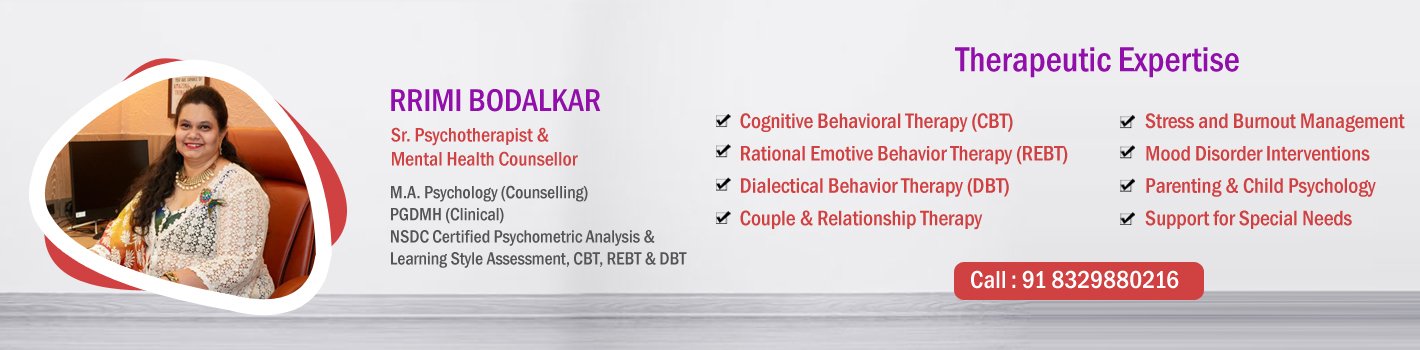
RRIMI BODALKAR – Sr. Psychotherapist / Mental Health Counsellor
RRIMI BODALKAR is a Sr. Psychotherapist / Mental Health Counsellor practising in Nagpur. Her qualifications include M.A. Psychology (Counselling), PGDMH (Clinical) and NSDC Certification in Psychometric Analysis and Learning Style Assessment. Her specialised training includes Cognitive Behavioural Therapy (CBT), Rational Emotive Behaviour Therapy (REBT) and Dialectical Behaviour Therapy (DBT). Her work includes psychological counseling, psychometric assessment and support for emotional and behavioural concerns. In the context of career guidance, individual discussions and appropriate assessment tools may help students explore interests, learning preferences and personal strengths. Career decisions should also consider academic eligibility, course requirements and practical circumstances, with referrals to other qualified professionals when specialised assessment or services are required.
Frequently Asked Questions About Career Counseling
1. What is career counseling and how does it help students?
Career counseling is a structured process that helps students understand their interests, abilities, educational options and professional goals. It can help them compare career pathways, understand course requirements and develop a realistic educational plan.
Career guidance can begin during the secondary school years, particularly when students are preparing to select subjects after Class 10. It can also be useful after Class 12, during college, after graduation or when considering a professional change.
3. Is career counseling necessary after Class 10?
It is not compulsory for every student, but it may be useful when a student is uncertain about selecting Science, Commerce, Humanities, vocational education or a diploma pathway. Guidance can help compare interests, academic preparation and future course requirements.
4. How does career counseling help after Class 12?
After Class 12, students may need to compare undergraduate courses, professional programmes, entrance examinations and vocational qualifications. Career counseling can help organise these options and identify pathways that match the student’s interests and eligibility.
5. Can career counseling help students who have no clear career interest?
Yes. A student does not need to have a fixed career goal before seeking guidance. Discussions about favourite subjects, hobbies, strengths, preferred activities and educational experiences can help identify areas worth exploring.
6. What is psychometric career assessment?
Psychometric career assessment uses structured tools to examine selected characteristics such as interests, aptitudes, reasoning abilities or personality preferences. Results can support career discussions but should not be treated as a final decision about an individual’s future.
7. Does an aptitude test determine the right career?
No. An aptitude test examines selected abilities under particular testing conditions. Career decisions also depend on interests, motivation, educational eligibility, values, opportunities and practical circumstances.
8. Is IQ testing necessary for career counseling?
No. IQ testing is not necessary for every career counseling process. Cognitive assessment may be considered when there is a specific professional reason to understand selected intellectual abilities. An IQ score alone cannot establish career suitability.
9. What is the difference between aptitude and interest assessment?
Aptitude assessment explores selected abilities, such as verbal, numerical or abstract reasoning. Interest assessment explores the activities and subjects a person finds engaging. Both may contribute to career exploration, but neither independently determines the right occupation.
10. Can personality assessment help in choosing a career?
Personality assessment may help students reflect on their preferences, communication patterns and working styles. Its findings should be considered alongside interests, abilities, educational requirements and real-world information about occupations.
11. Can a career counselor recommend a particular college or course?
A counselor may help students understand course options, eligibility and factors to consider when comparing institutions. Students should independently verify recognition, admission requirements, fees and other details through official sources before making a decision.
12. How many sessions are required for career counseling?
The number of sessions depends on the student’s age, concerns, assessment requirements and the complexity of the decisions involved. Some students may need a few discussions, while others may benefit from follow-up guidance at different educational stages.
13. What happens during the first career counseling session?
The first session generally involves discussing the student’s academic background, interests, concerns, expectations and future goals. The counselor may explain the guidance process and determine whether further discussion or assessment would be useful.
14. Should parents attend career counseling sessions?
Parents may participate when appropriate, especially for younger students making educational decisions. However, students should also have opportunities to express their own interests and preferences. The approach should respect the student’s age, privacy and developing independence.
15. Can career counseling help students who are under parental pressure?
Career counseling may provide a structured setting in which students and parents can discuss interests, educational options and practical concerns. It can help clarify differences in expectations, although family discussions may require additional support when conflict is persistent.
16. Can career counseling reduce examination stress?
Career guidance may reduce some uncertainty by helping students understand educational options and plan their next steps. However, persistent anxiety or significant emotional distress may require separate psychological evaluation and support.
17. Is career counseling useful for students with low academic marks?
Yes. Academic marks are one factor in career planning, but they do not describe every ability or interest. A counselor can help students understand their current academic position, review eligibility requirements and explore realistic alternatives.
18. Can students change their career choices after counseling?
Yes. Career interests and goals can develop with experience, further education and changing circumstances. Counseling should support informed decisions while allowing individuals to review their plans when appropriate.
19. Can career counseling help students choose between two career options?
Yes. A counselor may help compare the two options based on interests, abilities, course requirements, educational costs, working conditions and long-term goals. The final decision should remain with the student.
20. Can career counseling help college students?
Yes. College students may need guidance when selecting specialisations, considering postgraduate study, exploring internships or planning their transition into employment.
21. Is career counseling useful for working professionals?
Career guidance can help working professionals review their experience, transferable skills, interests and possible career transitions. It may also help them evaluate further education or professional development options.
22. Can career counseling guarantee a successful career?
No. Career counseling cannot guarantee employment, admission, income or professional success. It supports decision-making by helping individuals understand options and plan their next steps. Outcomes depend on several personal, educational and economic factors.
23. Are psychometric test results always accurate?
No assessment is completely free from limitations. Results can be affected by language, educational exposure, attention, motivation, testing conditions and the suitability of the tool. Findings should be interpreted by an appropriately qualified professional and considered alongside other information.
24. Can career counseling help students with learning difficulties?
Career guidance may help students explore educational pathways in relation to their interests, strengths and learning needs. If a student has persistent difficulties with reading, writing, mathematics or other academic skills, a separate learning disability assessment may be appropriate.
25. What is the role of a learning style assessment in career guidance?
A learning style assessment may help initiate discussion about study preferences and learning experiences. Such results should not be treated as fixed categories or used to restrict a student’s educational choices.
26. Can career counseling help with low confidence?
Career counseling may help students identify strengths, organise their options and understand the steps required for educational planning. If low confidence affects several areas of life, psychological counseling may also be considered.
27. What should students bring to a career counseling session?
Students may bring recent academic reports, details of subjects studied, information about entrance examinations already attempted, a list of interests and questions about possible courses. Previous assessment reports may also be useful when relevant.
28. Is career counseling confidential?
Personal information should be handled according to professional ethical and confidentiality requirements. For minors, parents or guardians may have an appropriate role in the process. Students and families should understand the confidentiality arrangements and any applicable limits before beginning.
29. Can a student choose a career based only on salary?
Salary is one practical consideration, but it should not be the only factor. Students should also consider interests, qualifications, working conditions, training requirements, personal values and the nature of the work.
30. Does career counseling have any limitations?
Yes. Career counseling cannot predict every future opportunity or remove all uncertainty. Assessment results may have limitations, course eligibility can change and employment conditions can vary. Guidance should therefore be based on current information and realistic expectations.
31. How should students evaluate career counseling recommendations?
Students should understand the reasons behind each recommendation and compare it with official course requirements, personal interests, academic preparation and practical circumstances. They should be able to ask questions and consider alternatives rather than accepting a recommendation without discussion.
32. Is follow-up necessary after career counseling?
Follow-up may be useful when students need to review subject choices, admission decisions, examination plans or changing interests. The need for further sessions depends on individual circumstances and the decisions being considered.
33. Can career counseling help students who want to study outside Nagpur?
Yes. Career guidance can include comparing educational opportunities in other cities or states. Students should review institutional recognition, course eligibility, accommodation, fees, travel and other practical considerations before applying.
34. What if a student does not agree with the assessment results?
Assessment results should be discussed openly. A student may ask for clarification about the tools, interpretation and limitations. Test findings are only one part of career exploration and should not override the student’s experiences, interests or other relevant information.
35. When should someone seek professional career guidance?
Professional guidance may be useful when a student or working professional is uncertain about educational or occupational choices, has difficulty comparing options or needs help creating a realistic plan. If significant emotional distress is also present, a separate psychological evaluation may be appropriate.
Making Informed Career Decisions Through Professional Guidance
Career decisions involve more than selecting a popular course or choosing a profession based on examination marks. They require an understanding of personal interests, academic abilities, educational eligibility, practical circumstances and long-term goals. Students may experience confusion because of family expectations, peer influence, limited career awareness or uncertainty about future opportunities. A structured career counseling process can help them explore these concerns and compare educational and professional pathways more thoughtfully.
Psychometric assessments, including interest, aptitude, personality and selected cognitive assessments, may provide additional information when used appropriately. However, no test can determine a person’s entire future or guarantee professional success. Students should combine assessment findings with reliable career information, discussions with educators and an understanding of actual course requirements. Parents can contribute by offering guidance without placing unnecessary pressure on children. Anyone facing persistent career-related stress or emotional difficulties may also consider appropriate psychological support. An evaluation by a suitably qualified professional can help individuals understand their options and make decisions that reflect their abilities, interests and circumstances.
Disclaimer: The information provided in this article is for educational purposes only and should not be substituted for professional medical advice, diagnosis, or treatment. Always seek the advice of your physician regarding any medical condition.