
The Science Behind Cognitive Behavioral Therapy (CBT)
The Science behind Cognitive Behavioral Therapy (CBT) : Cognitive Behavioral Therapy (CBT) is one of the most widely used evidence-based approaches in modern psychotherapy. It is based on the understanding that thoughts, emotions, and behaviours are closely connected. When unhelpful thinking patterns influence emotions and actions, they can contribute to anxiety, depression, stress, low confidence, relationship difficulties, and other psychological concerns. CBT helps individuals identify these patterns and develop healthier, more practical ways of responding to everyday challenges.
CBT is not simply about positive thinking. It is a structured therapeutic approach that focuses on understanding the connection between thoughts, feelings, physical responses, and behaviours. With professional guidance, individuals learn to examine unhelpful beliefs, test them against evidence, and gradually develop more balanced responses.
How Does CBT Work?
The science behind CBT is based on the principle that changing patterns of thinking and behaviour can influence emotional wellbeing. For example, a person experiencing anxiety may automatically interpret an ordinary situation as dangerous. This thought can increase physical tension and fear, which may lead to avoidance. CBT works on breaking this cycle by identifying the thought, examining its accuracy, and developing a more realistic response.
- Identifying negative or unhelpful thoughts
- Understanding emotional and behavioural reactions
- Examining beliefs and assumptions
- Learning healthier coping strategies
- Practising new behavioural responses
- Developing skills that can be used outside therapy
Why Is CBT Considered an Evidence-Based Therapy?
CBT has been extensively studied for a range of psychological concerns. Its structured nature allows therapists and clients to identify specific problems, establish therapeutic goals, practise relevant skills, and monitor progress. Depending on the individual’s concerns, CBT techniques may be useful in anxiety counselling, depression therapy, stress management, anger management, insomnia counselling, fears and phobias treatment, confidence building, and behavioural concerns.
For individuals looking for Effective Anxiety Treatment or Best Depression Treatment in Nagpur, CBT may form an important part of an individually planned psychological intervention when clinically appropriate.
CBT and Anxiety
Anxiety can involve excessive worry, fear, avoidance, physical tension, and repeated negative predictions. CBT helps individuals understand the thoughts that maintain anxiety and gradually develop healthier responses. Techniques may include identifying cognitive distortions, realistic thinking, relaxation strategies, behavioural exercises, and gradual exposure when appropriate.
Professional Anxiety Counselling in Nagpur can help individuals understand their anxiety patterns and work towards practical coping skills. CBT-based approaches may also be considered as part of Best Anxiety Disorders Treatment depending on the individual’s needs.
CBT for Depression
Depression may involve persistent sadness, loss of interest, self-critical thinking, hopelessness, reduced motivation, and withdrawal from activities. CBT focuses on identifying negative thinking patterns and gradually increasing constructive behaviours and meaningful activities.
Through Depression Therapy in Nagpur, CBT-based techniques may help an individual recognise automatic negative thoughts, evaluate them more realistically, and develop healthier behavioural patterns. A Depression Counsellor in Nagpur can also help determine an appropriate therapeutic approach.
CBT for Stress, Negative Thinking and Low Confidence
Everyday stress can become difficult to manage when a person repeatedly anticipates failure, criticism, rejection, or negative outcomes. CBT helps identify these thinking patterns and replace unhelpful responses with practical coping strategies. This can support Stress Reduction Coping Strategies, Negative Thinking Therapy, Low Confidence Counselling, Self-Esteem Counselling, and Personal Counselling.
For individuals struggling with confidence or self-worth, structured therapy can focus on identifying self-critical beliefs and building healthier behavioural experiences. Confidence Building Counselling and Self-Esteem Counselling may therefore be useful components of a broader mental wellness plan.
CBT and Other Therapeutic Approaches
CBT is one approach within a broader field of psychotherapy. Depending on the individual’s concerns, a mental health professional may use or integrate techniques from Rational Emotive Behavior Therapy (REBT), Dialectical Behavior Therapy (DBT), Behavioral Therapy, Couple & Relationship Therapy, Play Therapy, Parenting & Child Psychology Counselling, or other appropriate approaches.
The objective is not to use a particular therapy simply because it is popular, but to select strategies that match the person’s concerns, goals, developmental stage, and therapeutic requirements.
CBT Treatment Procedure
A typical CBT process is structured around the individual’s concerns and may involve the following stages:
- Initial assessment: Understanding the individual’s concerns, symptoms, history, goals, and current challenges.
- Problem identification: Recognising recurring thoughts, emotions, behaviours, and situations that contribute to distress.
- Goal setting: Establishing realistic and measurable therapeutic goals.
- Cognitive work: Identifying automatic thoughts and examining unhelpful beliefs or thinking patterns.
- Behavioural strategies: Practising healthier responses and gradually changing behaviours that maintain the problem.
- Skill development: Learning coping, communication, emotional regulation, problem-solving, and stress-management techniques.
- Progress review: Reviewing changes and adjusting therapeutic strategies according to progress.
- Long-term skills: Learning how to apply CBT techniques independently in everyday situations.
CBT for Children, Adolescents and Families
CBT principles can also be adapted for children and adolescents. Depending on age and developmental needs, therapy may incorporate age-appropriate activities, behavioural exercises, communication strategies, and parental involvement. Concerns may include school issues, academic stress, behavioural difficulties, social skills, anxiety, confidence, emotional regulation, and adjustment challenges.
A Child Psychologist may use developmentally appropriate therapeutic techniques. Parenting Support & Coaching can also help parents understand behavioural patterns and support healthier communication at home.
CBT for Relationship and Emotional Concerns
Unhelpful assumptions and communication patterns can influence relationships. CBT-based techniques may help individuals recognise emotional triggers, challenge assumptions, improve communication, and develop healthier responses during conflict. Depending on the situation, Relationship & Marriage Counselling, Couple Counselling, or Anger Management may be considered.
CBT for Career and Academic Challenges
Academic pressure, career uncertainty, examination stress, and fear of failure can affect concentration and confidence. Psychological counselling can help students understand their concerns, identify unhelpful thinking patterns, improve decision-making, and develop practical coping strategies.
Professional Career Counselling, Best Career Guidance for Students, and Career Counselling after 10th and 12th can help students make informed academic and career decisions.
CBT and Psychological Assessment
In some situations, psychological assessment can provide additional information about cognitive abilities, learning patterns, personality characteristics, attention, or behavioural concerns. Depending on the purpose of assessment, services may include Cognitive/Intellectual Assessment, Personality Assessment, Neuropsychological Testing, ADHD Testing, Autism Spectrum Disorder Evaluation, and Learning Disability Assessment.
Assessment and therapy are different processes, but assessment findings may sometimes help a professional understand an individual’s needs and plan appropriate interventions.
Who Can Benefit from CBT?
- People experiencing persistent anxiety or excessive worry
- Individuals dealing with depressive thoughts or low motivation
- People experiencing chronic stress or burnout
- Individuals struggling with negative thinking or low confidence
- People dealing with fears, phobias, or avoidance
- Individuals experiencing anger or emotional regulation difficulties
- People facing relationship or communication difficulties
- Students experiencing academic or examination stress
- Individuals dealing with life transitions and adjustment challenges
- People seeking personal growth and healthier coping skills
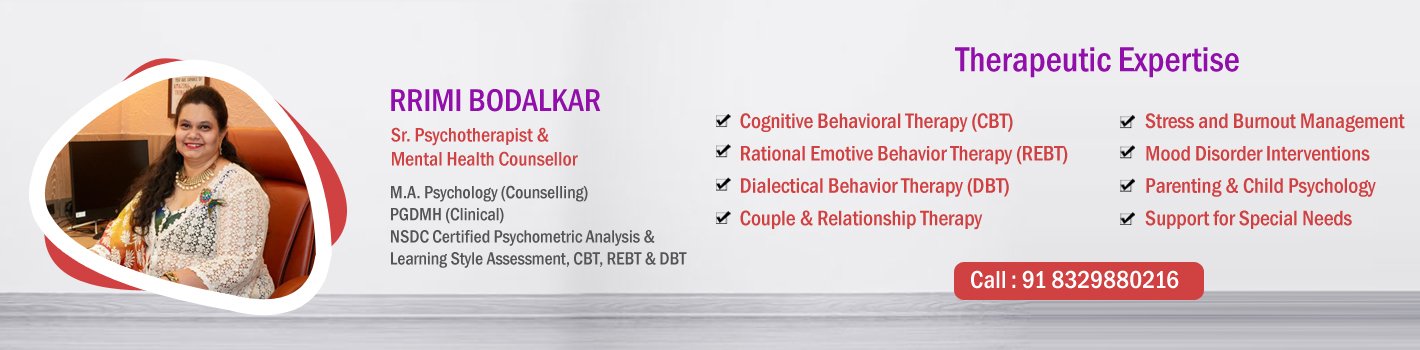
RRIMI BODALKAR – Sr. Psychotherapist / Mental Health Counsellor in Nagpur
RRIMI BODALKAR, Sr. Psychotherapist / Mental Health Counsellor, M.A. Psychology (Counselling), PGDMH (Clinical), NSDC Certified Psychometric Analysis & Learning Style Assessment, CBT, REBT & DBT (Specialised), practices in Nagpur and provides psychological counselling and psychotherapy focused on emotional wellbeing, behavioural concerns, relationships, stress management, career-related concerns, and personal development. Her approach may incorporate structured techniques from CBT, REBT and DBT according to individual needs, with counselling designed around the person’s concerns, goals, and circumstances.
Frequently Asked Questions About CBT
1. What is Cognitive Behavioral Therapy?
CBT is a structured form of psychotherapy that focuses on the relationship between thoughts, emotions, and behaviours. It helps individuals recognise unhelpful patterns and develop healthier ways of responding.
2. Is CBT useful for anxiety?
CBT is commonly used to address anxiety-related concerns. The approach may involve identifying anxious thoughts, understanding avoidance patterns, developing coping skills, and practising healthier behavioural responses.
3. Can CBT help with depression?
CBT may help individuals identify negative thinking patterns and behavioural cycles associated with depression while developing more constructive coping and activity patterns.
4. How long does CBT take?
The duration varies according to the individual’s concerns, goals, severity, progress, and therapeutic requirements. Some people may benefit from a relatively structured course, while others may require longer-term support.
5. Is CBT suitable for children and teenagers?
CBT techniques can be adapted for children and adolescents when appropriate. The methods are modified according to age, developmental level, concerns, and family circumstances.
6. Can CBT help with anger management?
Yes. CBT-based techniques can help individuals identify thoughts and situations that contribute to anger and practise healthier emotional and behavioural responses.
7. Is CBT the same for everyone?
No. Effective psychotherapy should be adapted to the individual’s concerns, personality, goals, circumstances, and response to treatment. A qualified professional determines which therapeutic strategies are appropriate.
The science behind Cognitive Behavioral Therapy (CBT) is based on understanding and changing the interaction between thoughts, emotions, and behaviours. By developing awareness and practical psychological skills, individuals can learn to respond more effectively to anxiety, depression, stress, relationship difficulties, low confidence, and everyday challenges. When delivered by a qualified mental health professional, CBT can become a structured and practical component of an individual’s overall psychological wellbeing and personal development.
